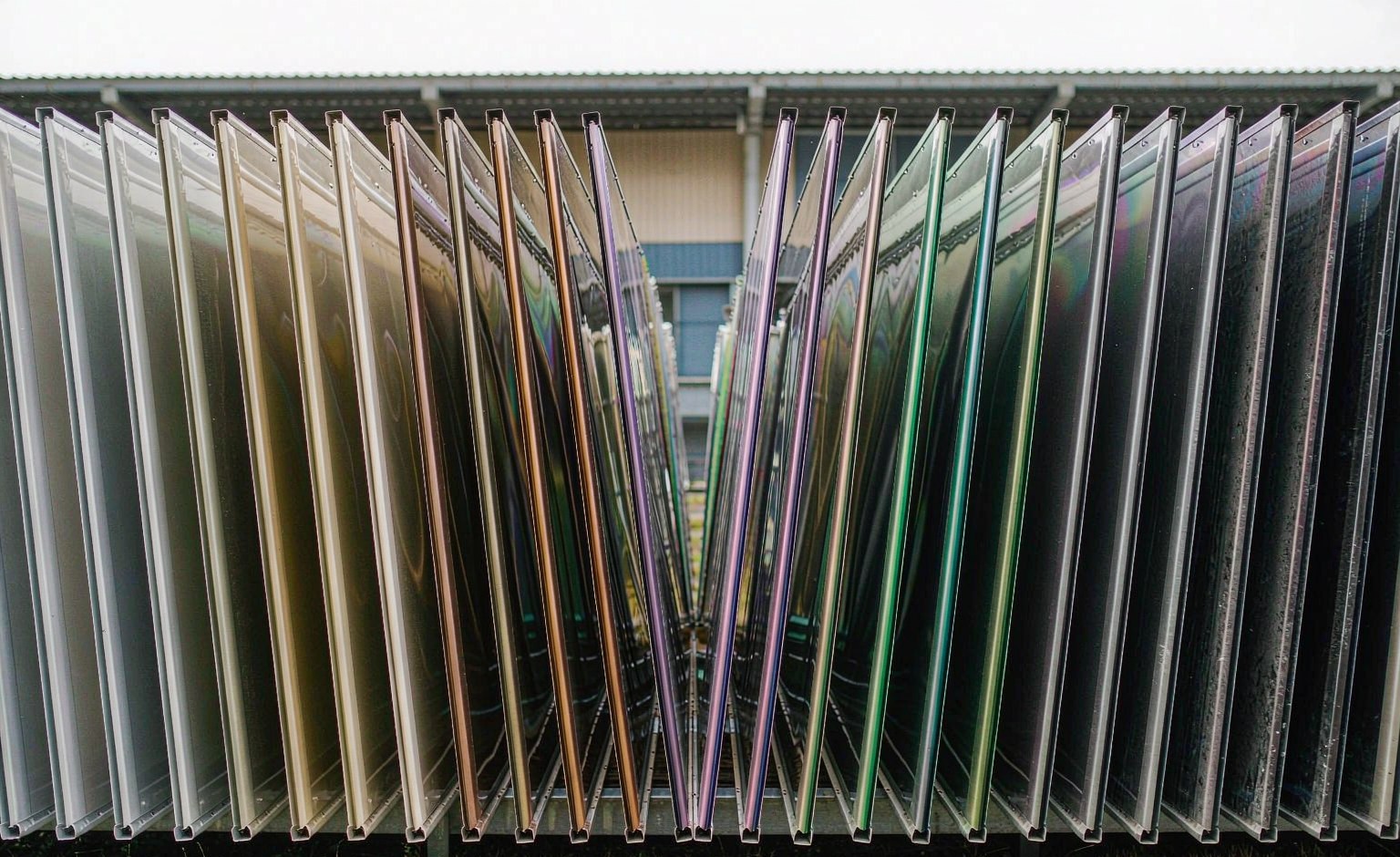
"Is your pearl pigment lightfast?" is a fair question with a misleading premise. Mica-based effect pigments are mineral and chemically stable; the failure you actually observe outdoors is almost always binder degradation revealing itself as chalking, gloss loss or colour drift. Specifying durability therefore means specifying the system, not the powder.
| Method | What it does | Best for |
|---|---|---|
| ASTM G154 | Fluorescent UV / condensation cycling | Fast comparative screening of coating systems |
| ASTM G155 | Xenon-arc exposure, closer to full-spectrum sunlight | Correlation with real outdoor exposure |
| ISO 4892-3 | Plastics exposure to fluorescent UV | Moulded parts and masterbatched plastics |
| ISO 105-B02 | Colour fastness to artificial light, blue wool scale | Expressing a lightfastness rating |
Q1: Do interference pigments fade differently from absorbing pigments?
Their colour comes from structure rather than from a dye molecule, so they do not "bleach" the way organic colourants do. What changes outdoors is how much light reaches the structure — hence the dependence on the binder and topcoat.
Q2: Can I use an interior grade outdoors?
The pigment may well survive; the coating carrying it probably will not. Choose the binder system for the exposure first, then the pigment grade for the look.
Q3: Are pearlescent pigments lightfast?
Mica-based effect pigments are mineral and chemically stable; the outdoor failure you observe is almost always binder degradation (chalking, gloss loss, colour drift), not pigment breakdown. Specify the system, not the powder. See quality standards.
Q4: Which test methods show lightfastness?
ASTM G154 (fluorescent UV/condensation) for fast comparative screening, ASTM G155 (xenon-arc) for full-spectrum correlation, ISO 4892-3 for moulded plastics, and ISO 105-B02 (blue wool scale) for colour fastness to artificial light. See the pearlescent pigment range.
Q5: How do I write a durability specification that means something?
State the finished system, the exposure standard and cycle, and include gloss retention (not only colour). “Effect pigment with 1,000 h QUV, ΔE ≤ 2, gloss retention ≥ 80 %” is meaningful; “lightfast pigment” is not. The coatings application page covers binder choices.
Q6: Why does my coating chalk even though the pigment is stable?
Chalking and gloss loss are typically UV-induced binder chain scission — the dominant failure mode — plus a hazy or yellowing topcoat that mutes the effect. The pigment is often untouched; the system failed. See the coatings guide.
Q7: Should I keep a control sample for weathering tests?
Yes. Retain an unexposed reference of the same batch; colour-drift claims are only defensible against a control, and performance on one substrate (for example a metal panel) is not transferable to a plastic moulding or coated fabric. Validate via quality standards.