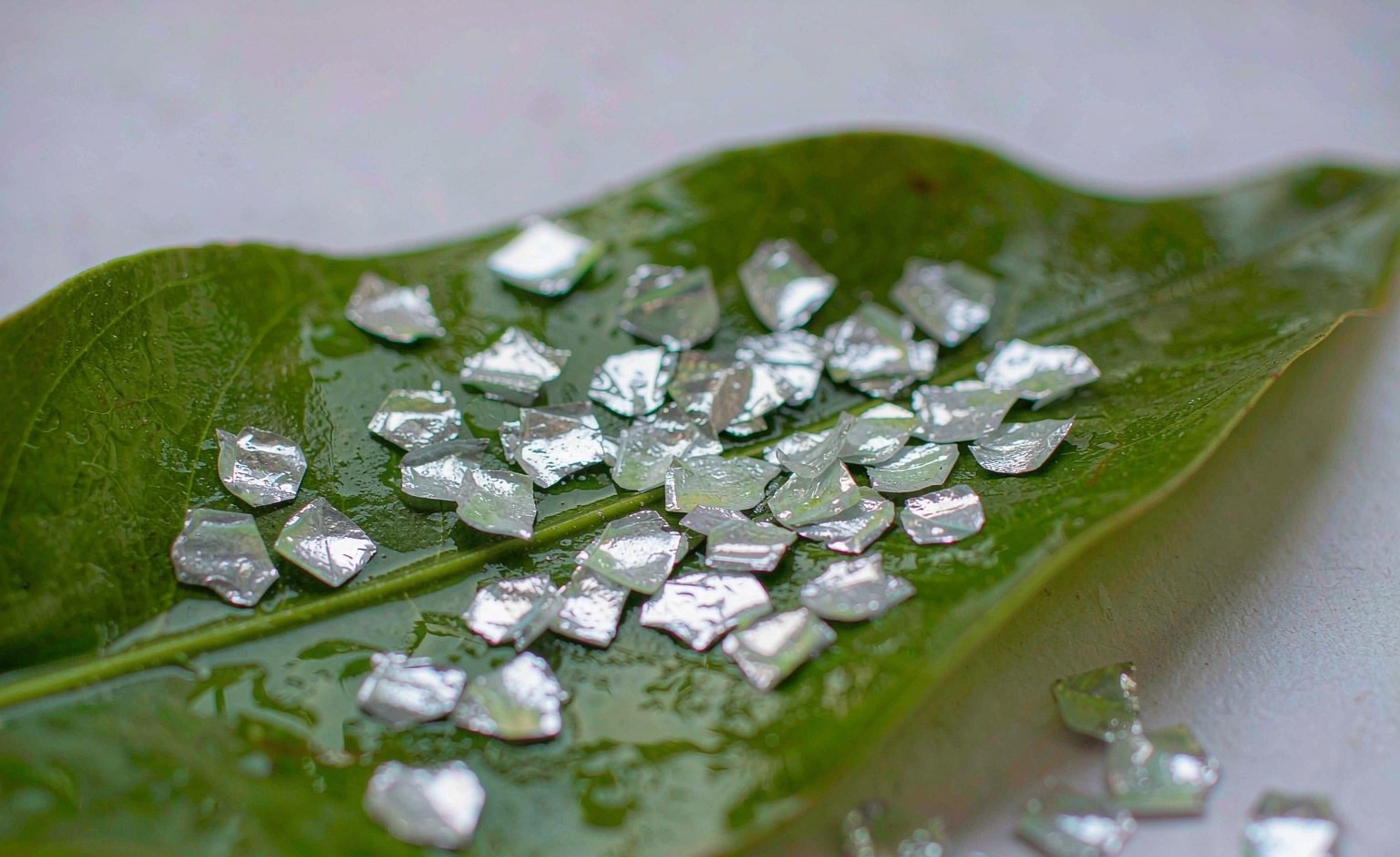
The fastest-growing request in decorative pigment sourcing is no longer "how shiny" but "what happens to it afterwards". Cellulose-based biodegradable glitter answers the end-of-life question that conventional PET glitter cannot.
Instead of PET film, the base is regenerated cellulose — typically derived from sustainably sourced wood pulp — coated with a thin reflective layer and a colour layer. The result keeps a glitter look while being designed to break down under defined environmental conditions rather than persisting as a microplastic.
| Claim | What a buyer should ask for |
|---|---|
| "Biodegradable" | The test standard and medium (freshwater, soil, marine, industrial compost) |
| "Marine degradable" | Marine-specific test (e.g., ASTM D6691 / ISO 22403-style) and time frame |
| "Compostable" | Industrial or home compost standard and certificate number |
Biodegradable glitter is generally more sensitive to heat and some solvent systems than PET. It suits cosmetics, festivals, soaps and rinse-off formats especially well, while high-heat industrial coatings still favour PET or effect pigments.
Q: Is biodegradable glitter as shiny as PET?A: Visually close for decorative use, though exact brilliance depends on grade. For maximum mirror effect, PET remains the reference; for sustainability messaging, cellulose is the story.
Q: Does "biodegradable" mean it is safe to flush?A: No. Even certified biodegradable glitter should be disposed of responsibly; certification describes breakdown under specified conditions, not permission to release into waterways.