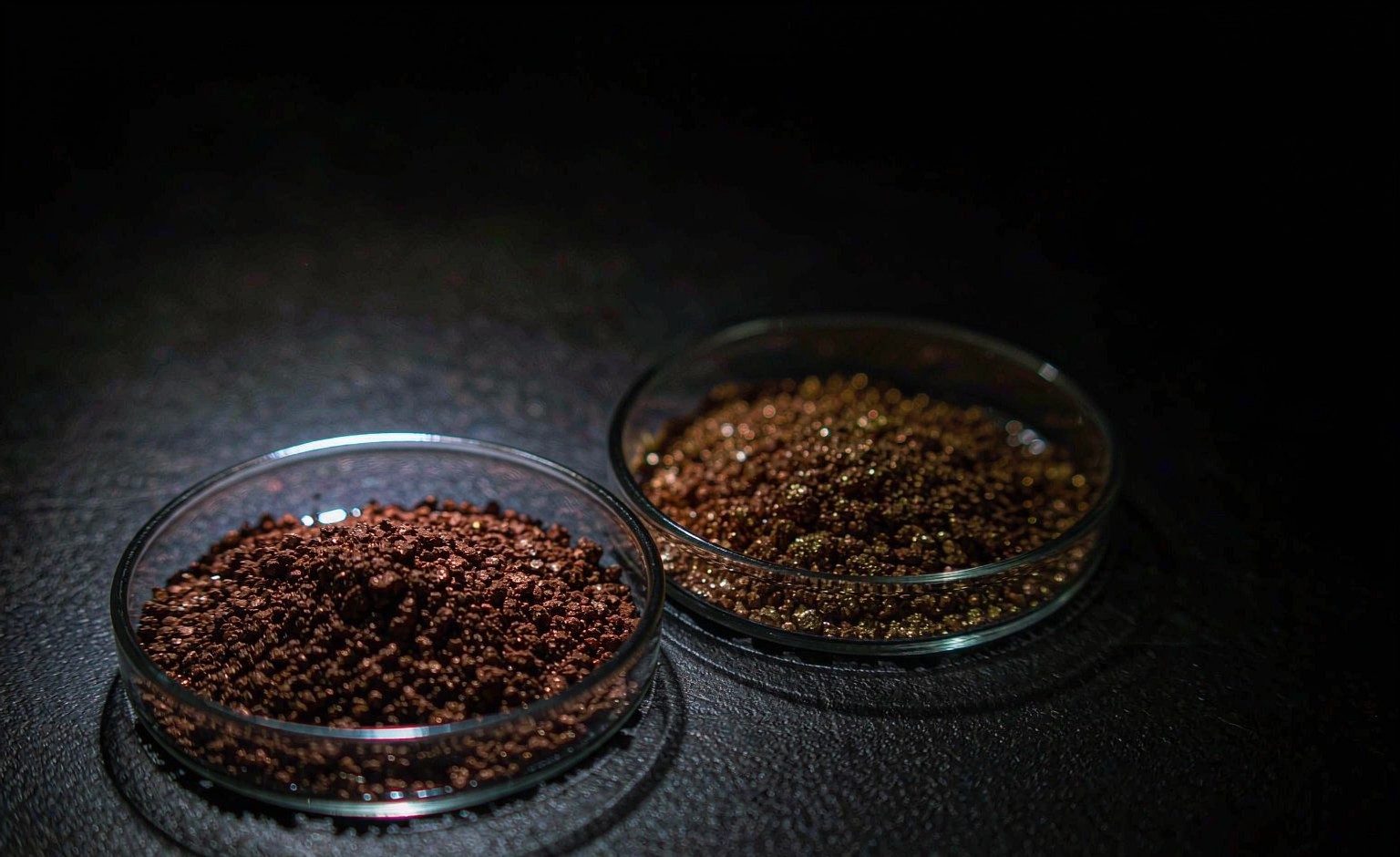
Bronze powder is not pure bronze — it is a copper–zinc alloy flake engineered for a warm metallic gold or copper look. The colour is tuned by the alloy ratio, which is the first thing a buyer should specify.
| Cu : Zn ratio | Visual |
|---|---|
| High copper (low zinc) | Rich red-copper / penny tone |
| Mid ratio | Classic "gold bronze" |
| Higher zinc | Pale, greenish-gold ("rich gold" pale) |
Copper alloys oxidise and can tarnish or shift colour under humidity, sulphur or alkaline conditions. Surface treatment of the flake, sealing under a clear topcoat, and avoiding alkaline carriers are the three levers. For exterior or humid-service parts, specify a treated grade and a barrier topcoat.
Q: Can I match a specific gold shade from a competitor?A: Usually yes within tolerance if you supply the target sample; alloy ratio and particle size together define the shade, so send a swatch for matching rather than describing "gold".
Q: Why did my gold print turn patchy green-grey?A: Likely tarnish from moisture or an incompatible carrier. Use a treated grade and a sealed, neutral-pH system.