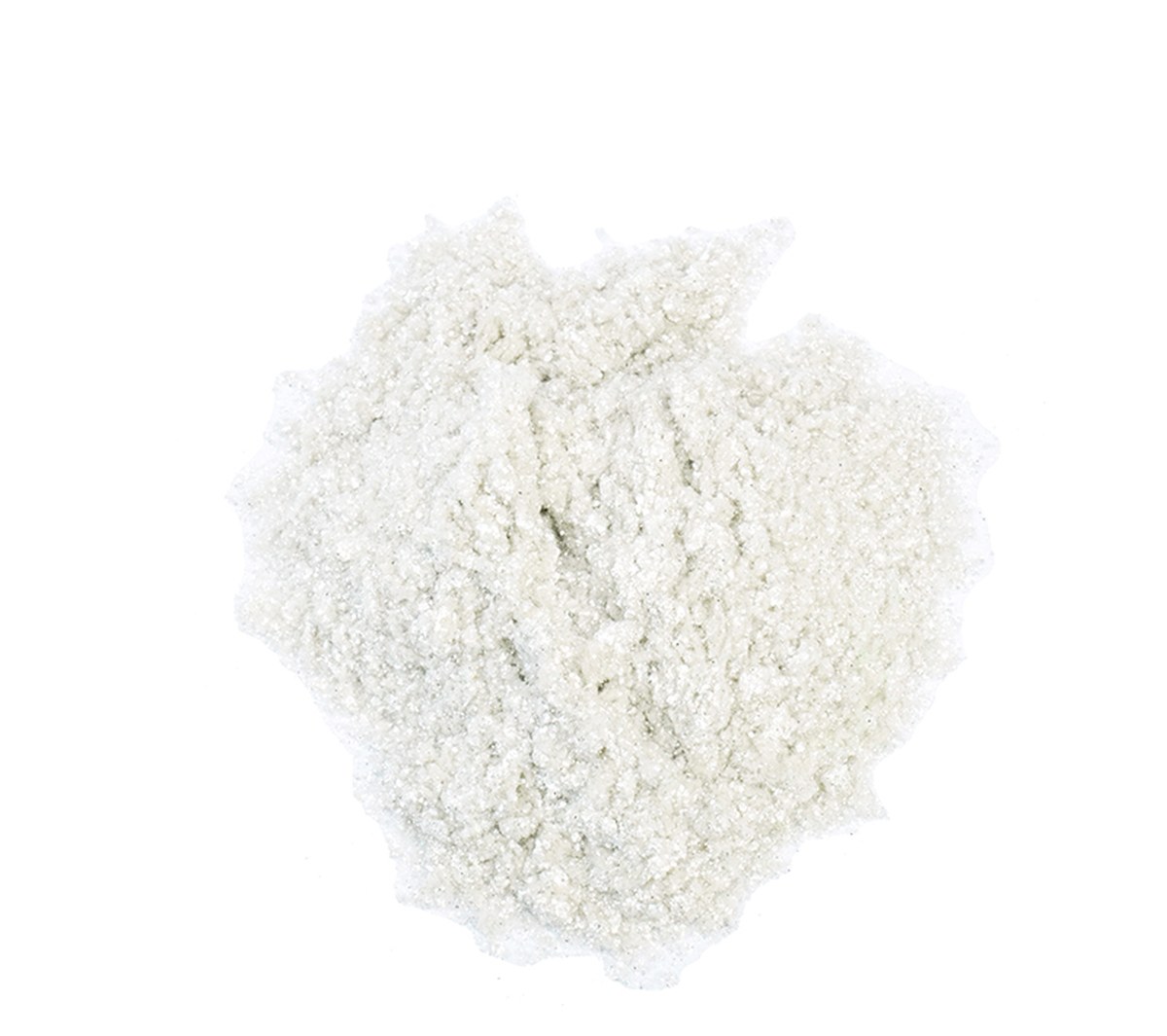
Nail and cosmetic color is moving away from flat, one-note pigment toward finishes that shift with light and movement. Pearl pigment — fine, plate-like mica particles that interfere with light — sits at the center of this shift. For formulators and brand owners the question is no longer whether to add a pearl effect, but how to specify one that survives the base, the process and the compliance review. This guide looks at the trend, the science, and the specification choices behind a stable pearl finish.
The effect is optical, not dye-based. Pearl pigment is built from thin, plate-like particles coated with metal oxides. When these plates lie parallel in a film, light reflecting from their many layers interferes with itself and produces a soft luster, or a color that changes with viewing angle. The finer the plate, the smoother and more satin the finish; larger plates give a bolder sparkle. Understanding this geometry is the first step to choosing a grade, because the same pigment can read as elegant or gritty depending on particle size and orientation.
For nail and cosmetic use, safety documentation is part of the product, not an afterthought. Our cosmetic-oriented grades are produced in a GMP workshop and supplied with COA and MSDS on request, with lot-level traceability. Depending on the application and target market, the relevant frameworks can include FDA food-contact references such as 21 CFR 178.3297, the EU framework (EU) No 10/2011, EN71-3 for element migration, RoHS and REACH SVHC. We state frameworks, not certificate numbers: ask us for the documents matching your market and we will supply them.
Nail systems and cosmetics stress pigments differently. Gel polish and UV-cured systems need grades that suspend in the base and hold their interference color through curing and topcoat. Lip and face formulas need oil-dispersible grades that survive high-shear mixing and heating-cooling cycles without clumping. In practice we match particle size to the finish: fine grades around 5–25 µm for a smooth satin sheen, and broader ranges when a more pronounced effect is wanted. We also recommend a wetting and dispersion sequence that protects the plate structure — over-milling breaks the plates and kills the luster.
Rather than a single 'best' grade, we recommend by series and substrate. Our Cosmetic-Grade Pearl Pigment series is offered in silver-white, interference and soft pastel directions, with fine particle-size ranges suited to nail, lip and face. We supply TiO₂-coated interference series and TiO₂-free (titanium-free) series by grade, so brands with specific regional requirements can specify precisely what the formula needs. Trial samples are prepared to your base system and target shade. Orders start from 0.01 kg, with a standard lead time of 7 days.
The finish is a trend, but the discipline is permanent: match the particle geometry to the base, confirm the compliance documents for your market, and test under real processing conditions. We have supplied effect pigments for more than 20 years and ship to customers in over 100 countries, with GMP production, FDA · Kosher · ISO 9001 · GMP certification at company level and COA/MSDS on every delivery. Send us your product type, base system and target shade, and our technical team will recommend a cosmetic-grade pearl pigment within 48 hours.
Send us your product type, base system and target shade. Our technical team will recommend a cosmetic-grade pearl pigment within 48 hours and prepare trial samples.
Request a Trial →