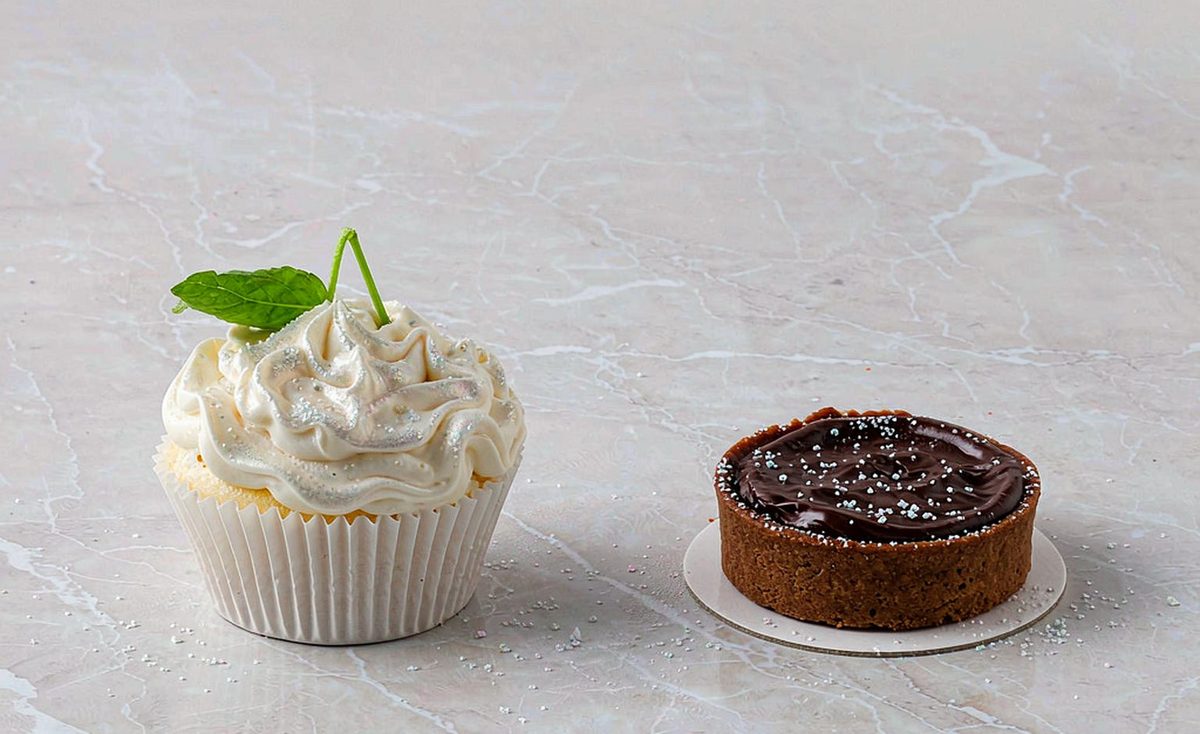
Edible luster dust is a food-grade pearlescent powder used to put a controlled shimmer on cakes, chocolate, confectionery and drinks. The sourcing decisions that matter are not primarily about colour: they are about confirming that the material is genuinely food-grade rather than a decorative craft dust, matching the particle size to the surface you are finishing, and holding the paperwork that proves the grade. This guide covers those three decisions, plus the regulatory question that sits closest to this product family — titanium dioxide. Browse the full food-grade pearlescent pigment range for the grades referenced below.
As Technical Director at EFFECT-PIGMENT (Hangzhou) Co., Ltd., I speak with food and confectionery buyers across Europe, the Middle East, the Americas and Southeast Asia. The first question is almost never about shade. It is about whether the dust is actually edible, and how to prove it to their own customer. In this category the specification and the paperwork are the product — the shimmer is the easy part.
— Steve Chan, Technical Director, EFFECT-PIGMENT (Hangzhou) Co., Ltd.
Edible luster dust belongs to the same optical family as the pearlescent pigment used in cosmetics and coatings: a mica platelet coated with a thin metal-oxide layer, usually TiO₂, and milled fine enough that the particles read as a smooth shimmer rather than a visible flake. What separates the edible grade is not the optical principle but the specification around it — food-grade raw materials, a controlled production environment, and lot-level food-safety documentation.
The effect is surface-level light reflection, not colour. A fine grade laid on fondant or chocolate catches light and reads as a soft metallic sheen; the same powder dispersed in a clear medium gives a pearlescent cast through the body of the product rather than sitting on top of it. That is why luster dust is normally a finishing material rather than a bulk ingredient: it changes how a surface behaves with light, and at sensible levels it does not change how the product tastes.
It is also worth being clear about what luster dust is not. It is not a colourant in the usual sense — it does not replace a dye or a lake in building a shade. It is an effect layer applied over a base that already has its colour. Buyers who expect a dust to shift a product from one colour to another are usually looking at the wrong product family.
The most expensive mistake in this category is buying the wrong "luster dust". The term is used commercially for two very different things: a food-grade pearlescent powder specified and documented for edible use, and a non-toxic decorative dust made for craft, nail and costume work. A craft product can be honestly labelled "non-toxic" and still carry no food-grade status at all — "non-toxic" is a statement about handling safety, not a licence to eat.
Three checks separate the two quickly:
For buyers building a food-contact specification from scratch, our food-contact checklist walks through the questions worth asking before a first order, and the edible compliance comparison sets the food, cosmetic and craft categories side by side.
Because many pearlescent pigments rely on a TiO₂ coating, edible luster dust sits close to one of the most closely watched food-additive questions in the industry. The EU has discontinued E171 (titanium dioxide) as a food additive. The change concerns food use, and it has pushed buyers in that market toward E171-free and TiO₂-free alternatives for edible applications.
We state the regulatory position only and draw no legal conclusion from it. What matters commercially is that the specification and the destination market are matched: a grade that is acceptable in one market may not suit another, and the buyer's own regulatory review is the deciding step. If your brief requires E171-free material, say so at enquiry stage — it changes which grade you are quoted, and it is much cheaper to establish before a sample is approved than after a label is printed. Our E171-free edible pearl pigment guide covers the alternative routes in more detail.
Edible luster dust is supplied in particle-size bands, and the band does most of the work in deciding whether the result reads as satin sheen, pearl or sparkle. The table below describes directional, industry-typical behaviour. It is a starting point for a conversation, not a substitute for the grade data — confirm the specific grade against its TDS.
| Band | Effect on the surface | Typical edible use |
|---|---|---|
| Fine (satin band) | Smooth, even sheen; least visible as individual particles | Dusting over fondant, macarons, chocolate, petit fours |
| Mid (pearl band) | Clear pearl lustre with visible depth | Icing, glazes, dessert sprays, beverage shimmer |
| Coarse (sparkle band) | Discrete sparkle; reads as individual points of light | Feature decoration, celebration cakes, display pieces |
Two practical consequences follow. Finer grades cover more evenly and are far more forgiving of application technique, which makes them the safer default for a first specification. Coarser grades give more dramatic sparkle but show brush marks and settle faster in liquid, so they reward a tighter process. Many commercial finishes combine two bands — a fine grade as the even base and a coarser grade as the visible top note — because the blend, not the single grade, produces the effect a customer actually notices.
If your question is specifically how much to apply and how the powder behaves in storage, our dosage and shelf-life article takes that part of the subject further.
How the dust is applied changes the result as much as the grade does. Four methods cover most production:
In liquid applications the constraint shifts from coverage to suspension: fine grades stay dispersed longer, while coarser flakes settle and need agitation to keep the shimmer even through the pack. Our pearl effect in beverages and food packaging article covers that behaviour in more depth.
In this category the paperwork is the product. A food-grade supplier should be able to answer, in writing and for the specific grade and lot, the questions below.
| Document | What it should tell you |
|---|---|
| TDS | Grade identity: particle-size band, coating system, recommended use |
| COA (per lot) | Measured values for the material actually shipped to you |
| SDS | Hazard and handling information |
| Food-grade statement | The supplier's written confirmation of food-use status for that grade |
| Kosher certificate | Issued by the certifying body, where kosher status is claimed |
| Halal-compliant statement | A compliance statement — it is not the same thing as a Halal certificate |
Be precise about what is and is not claimed, because that precision is exactly what a serious buyer tests a supplier on. We hold FDA, Kosher, ISO 9001 and GMP certification; where a customer needs Halal, we state Halal-compliant rather than implying a certificate we do not issue. Our quality standards page and the certificates section on our About page set out the system behind those claims.
| Term | Meaning |
|---|---|
| edible luster dust | A food-grade pearlescent powder used to add shimmer to cakes, chocolate, confectionery and drinks. |
| pearlescent pigment | A pigment made of mica platelets coated with metal oxide, producing a pearl or shimmer effect. |
| mica | The mineral substrate of pearlescent pigment: a thin platelet of muscovite-type mica. |
| TiO₂ | Titanium dioxide, a common coating on mica platelets that creates the pearl effect. |
| E171 | The EU food-additive designation for titanium dioxide; the EU has discontinued it as a food additive. |
| food-grade / edible grade | Produced and documented for contact with, or ingestion by, humans, with per-lot food-safety paperwork. |
| COA | Certificate of Analysis: the per-lot document reporting measured values for the delivered material. |
| SDS | Safety Data Sheet: the standard hazard-communication document for a chemical product. |
| TDS | Technical Data Sheet: the specification sheet listing particle size, coating and recommended use. |
| Halal-compliant | Formulated without ingredients of concern to Halal dietary rules; stated as compliance, not as a certificate. |
| Kosher | Certified under kosher dietary rules; the certificate is issued by the certifying body. |
| particle size | The platelet diameter range of a pigment grade, which sets its shimmer-versus-sparkle character. |
Q1: Is all "luster dust" edible?
No, and this is the most common sourcing mistake in the category. Luster dust is a trade term used for both food-grade pearlescent powder and non-toxic decorative dusts made for craft work. A craft product can be honestly labelled non-toxic and still carry no food-grade status at all. Edible luster dust is specified and documented for food use, with a per-lot COA and food-safety paperwork. Confirm the food-grade status in writing before the material reaches a kitchen.
Q2: What is the difference between edible luster dust and edible glitter?
Both are decorative, but they are different product families. Luster dust is a fine, mica-based pearlescent powder that reads as a smooth shimmer or metallic sheen on a surface. Edible glitter is a larger flake that reads as discrete sparkle. Luster dust is dry-dusted, airbrushed or mixed into a medium; glitter is applied as visible specks. They are often used together but are specified and dosed separately.
Q3: Does edible luster dust contain E171 or TiO₂?
Many pearlescent pigments use a TiO₂ coating to create the pearl effect, so the question is fair. The EU has discontinued E171 (titanium dioxide) as a food additive, and buyers targeting that market often ask for E171-free or TiO₂-free alternatives instead. We state the regulatory position only, without legal conclusions, and recommend confirming the current rules of your target market before committing to a specification.
Q4: How much edible luster dust should I use?
It is an effect decision rather than a fixed recipe constant. Start with a light application and build up, because too much reads as a dusty film instead of shimmer. The right level depends on the base (fondant, chocolate, icing or liquid), the application method (dry dusting, airbrush or mixed into a medium) and the particle size of the grade. Work from the grade TDS and test on your own base before scaling.
Q5: What documents should I request from an edible luster dust supplier?
Ask for the food-grade specification in writing, a TDS for the specific grade, an SDS, and a COA per lot. If your market or customer requires it, ask for kosher certification and a Halal-compliant statement. Confirm which food-safety certifications the supplier actually holds rather than assuming, and check that the COA matches the grade and lot you receive.
Request food-grade TDS / SDS / COA and an edible luster dust sample for your application.